
Air Terminal Placement
Mast Position Planning
Down-Conductor Routes
Earthing Integration
Testing Documentation Support
SANS 10313 COMPLIANT SYSTEMS
Professional Lightning Conductors & Mast Installations
SA Lightning supplies and installs lightning conductors, air terminals, strike masts and down-conductor systems for residential, commercial, industrial and agricultural properties across South Africa. These systems are designed to intercept lightning strikes and safely guide high-energy discharge toward a properly designed earthing system.
Every conductor or mast installation should form part of a complete lightning protection approach, including suitable down-conductor routes, earthing, bonding, surge protection and inspection documentation.
STRIKE INTERCEPTION RISK
Poorly positioned conductors or masts can leave roof areas, equipment, solar installations or exposed structures outside the intended protection zone.
INTEGRATED DEFENCE SYSTEMS
- SANS Compliant Air Terminals & Strike Masts
- Low-Resistance Copper-Clad Earthing Grids
- Heavy-Duty Down Conductors & Safe Pathways
- Transient Surge Protection Devices (SPDs)
TECHNICAL SPECIALISATION
Lightning Conductors, Masts & Down-Conductor Services
Lightning Conductors
Complete direct-strike protection systems using air terminals, down-conductors, earthing and bonding designed around site-specific risk conditions.
Interception Masts
Conventional lightning conductors, free-standing masts and down-conductor routes for safe strike interception and controlled current dissipation.
Down Conductors
Early Streamer Emission lightning protection options assessed against the site layout, exposure, installation height and required protection radius.
Earthing Systems
Low-resistance earthing, bonding and equipotential connections to help safely dissipate lightning current and reduce dangerous potential differences.
Surge Protection
Complete direct-strike protection systems using air terminals, down-conductors, earthing and bonding designed around site-specific risk conditions.
Solar PV Protection
Conventional lightning conductors, free-standing masts and down-conductor routes for safe strike interception and controlled current dissipation.
Testing & Inspection
Early Streamer Emission lightning protection options assessed against the site layout, exposure, installation height and required protection radius.
Certification
Low-resistance earthing, bonding and equipotential connections to help safely dissipate lightning current and reduce dangerous potential differences.
ENGINEERED SAFETY WORKFLOW
4-Step Lightning Protection Process
step 1
Site Assessment
We assess the structure height, roof layout, exposure, existing protection, earthing points and areas that may need dedicated conductor or mast protection.
step 2
System Design
We plan suitable air terminal, mast and down-conductor positions based on the structure layout, risk profile and required protection approach.
step 3
Installation
Conductors, masts, fixings, down-conductors and related components are installed according to the approved protection layout.
step 4
Testing & Certification
The completed system is checked, tested and documented for maintenance records, compliance review and insurer reference where required.
STANDARDS & REGULATION
Designed for Compliance and Long-Term Protection
SA Lightning designs conductor and mast systems as part of a complete lightning protection approach. The system should consider strike interception, down-conductor routes, earthing, bonding, surge protection and clear documentation for maintenance and insurer review where required.
- SANS Compliant Air Terminals & Strike Masts
- Low-Resistance Copper-Clad Earthing Grids
- Heavy-Duty Down Conductors & Safe Pathways
- Transient Surge Protection Devices (SPDs)
FAQs
Conductor and Mast Planning
SA Lightning reviews the site layout, roof structure, exposure, protected areas and existing lightning protection before recommending suitable conductor or mast positions.
Down-Conductor and Earthing Integration
Conductors and masts must connect to suitable down-conductor routes and earthing systems so lightning current can be directed safely to ground.
Testing and Documentation
Testing records, inspection notes and supporting documentation can assist with maintenance planning, compliance review and insurer requirements where applicable.
Services
Related Lightning Protection Services
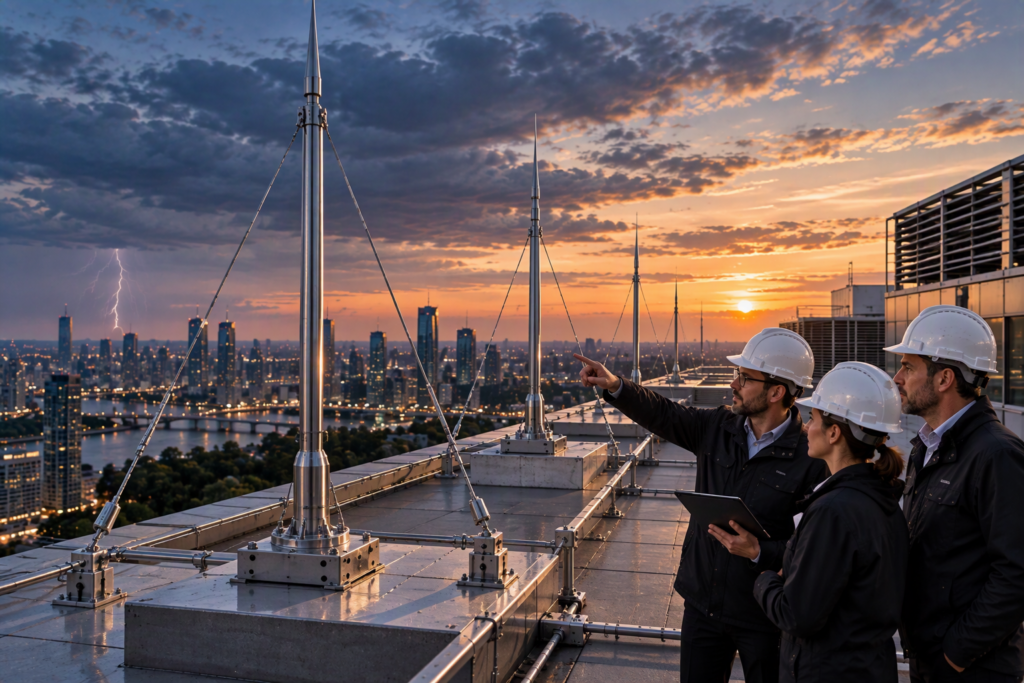
Lightning Conductors & Masts
Conventional lightning conductors, free-standing masts and down-conductor routes for safe strike interception and controlled current dissipation.
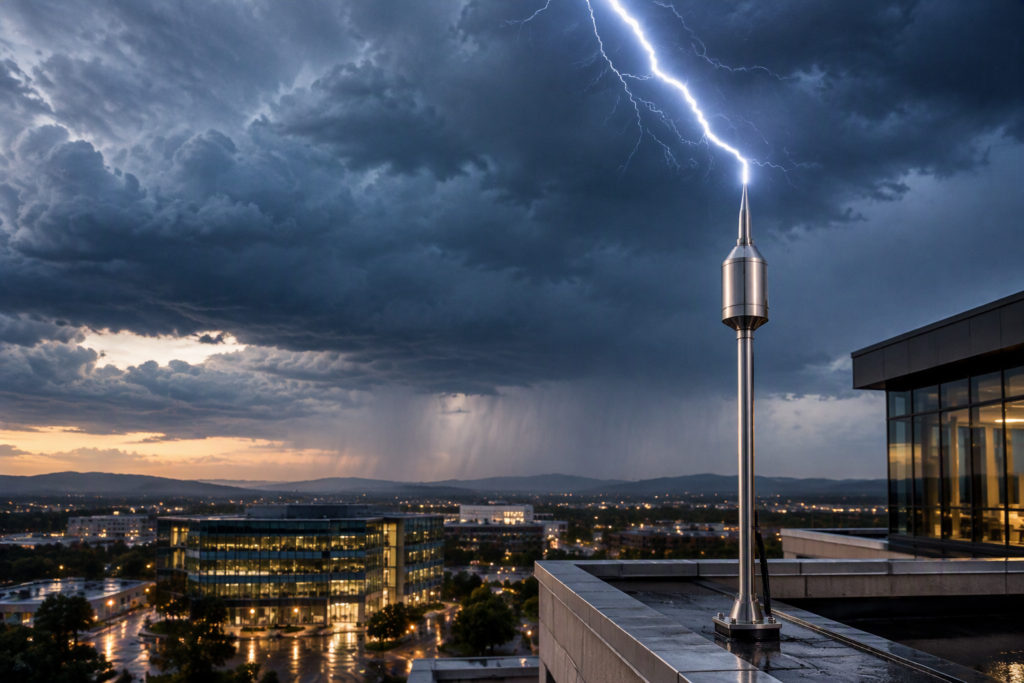
ESE Lightning Protection
Early Streamer Emission lightning protection options assessed against the site layout, exposure, installation height and required protection radius.
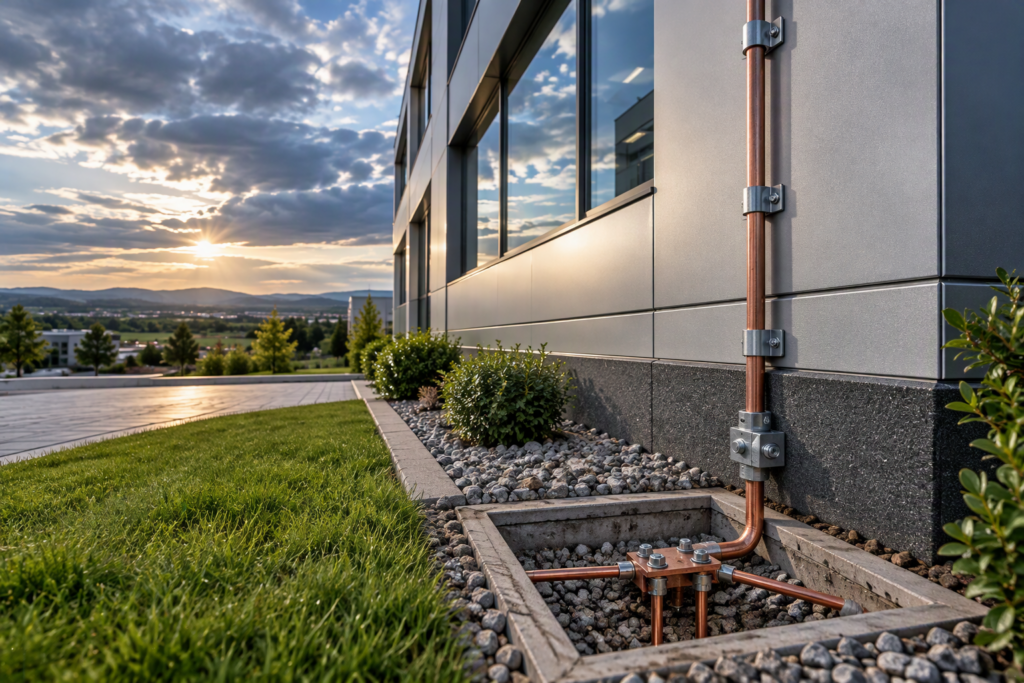
Earthing & Bonding
Low-resistance earthing, bonding and equipotential connections to help safely dissipate lightning current and reduce dangerous potential differences.
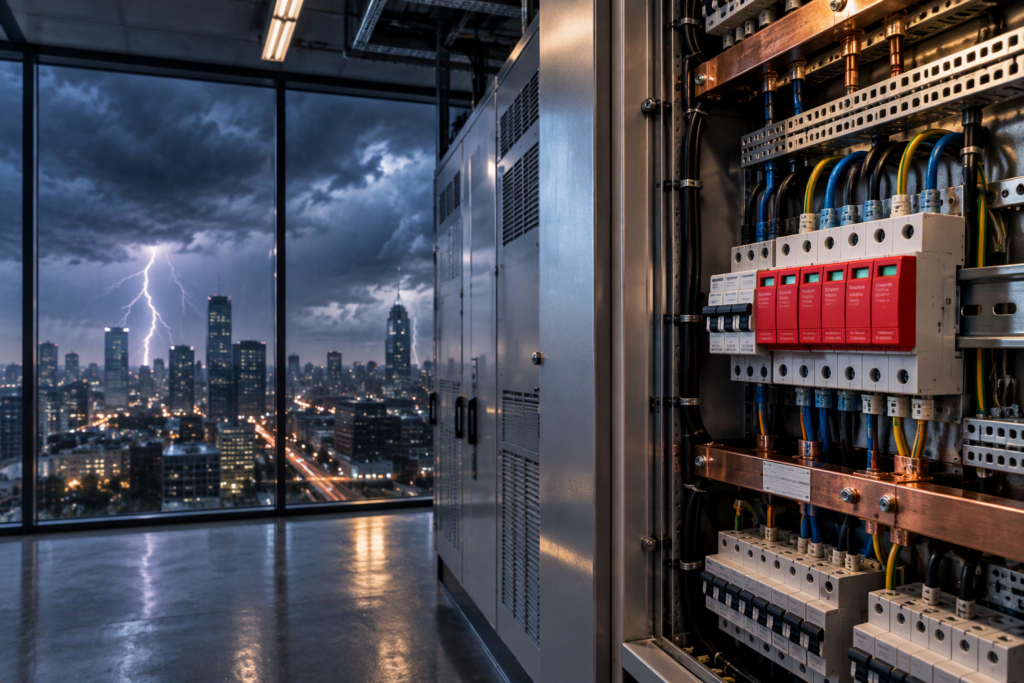
Surge Protection Devices
Surge protection devices that help reduce lightning-related overvoltage risk for DB boards, solar systems, electronics, automation equipment and commercial electrical infrastructure.
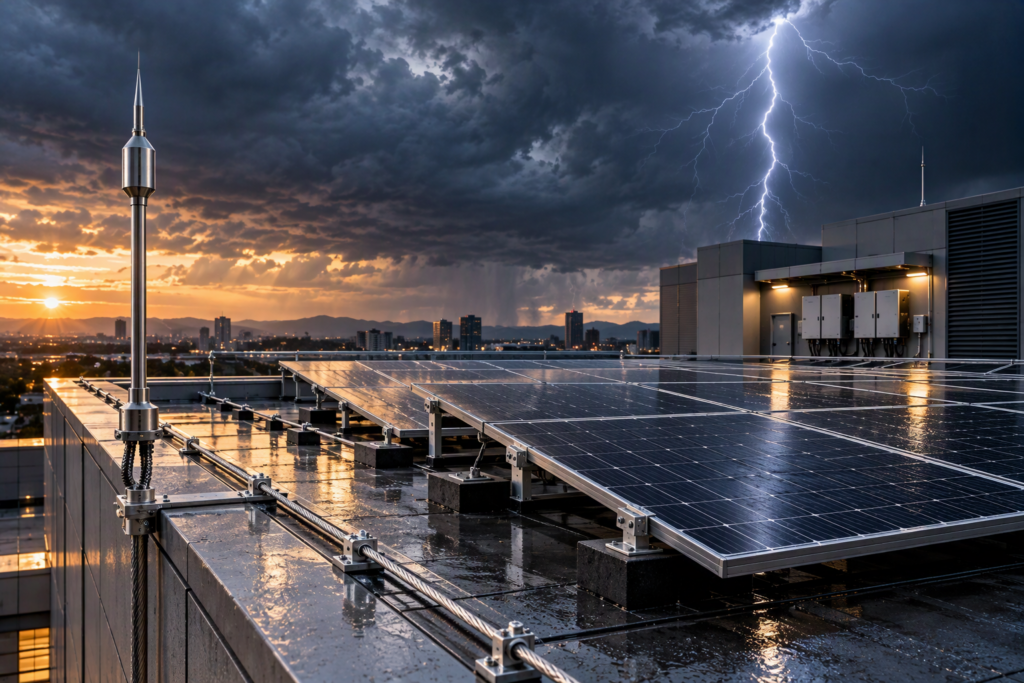
Solar PV Lightning Protection
Lightning, earthing, bonding and surge protection planning for solar PV systems, including panels, frames, inverters, batteries and cabling where required.
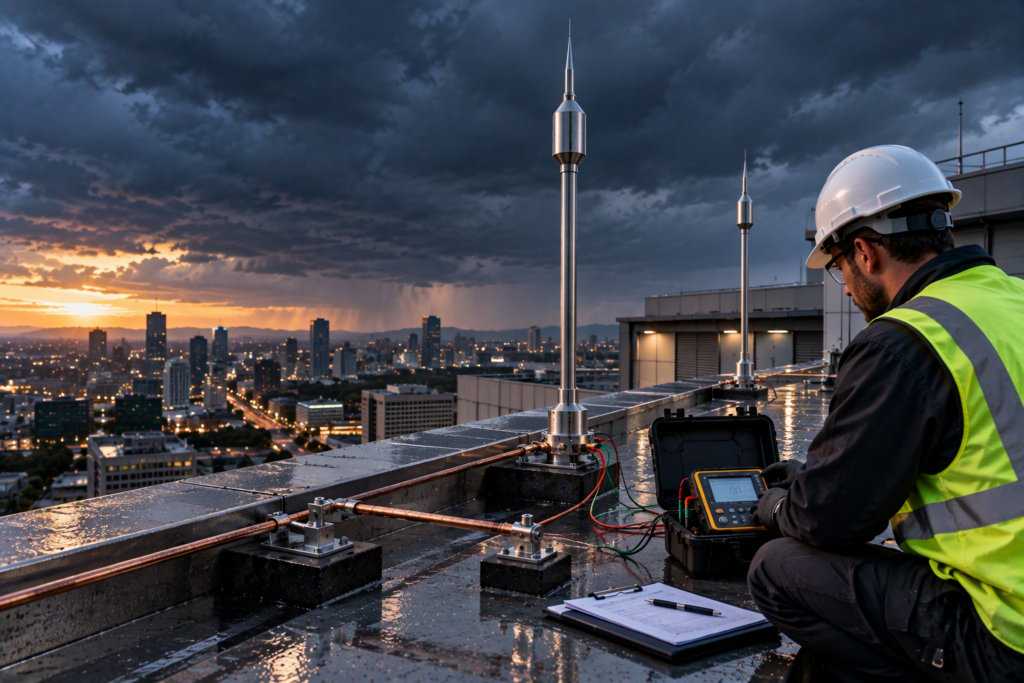
Testing, Inspection & Certificates
Testing, inspection and supporting documentation for existing lightning protection, earthing, bonding and surge protection systems.
TESTING & INSPECTION
Inspection, testing and documentation support for existing lightning protection, earthing, bonding and surge protection systems.
Technical Compliance
Lightning Conductors & Masts FAQ
SA Lightning supplies and installs lightning conductors, air terminals, strike masts and down-conductor systems for residential, commercial, industrial and agricultural properties across South Africa.
FAQs
Do I need a lightning mast or a conductor system?
It depends on the structure, height, roof layout and risk profile. Some buildings require roof-mounted conductors, while larger open areas or high-risk sites may require dedicated lightning masts.
Can a lightning mast protect an entire property?
A mast can create a zone of protection, but the design must be assessed properly. Larger sites may require multiple masts, down-conductors, earthing and surge protection.
Do conductors need to be connected to earth?
Yes. Lightning conductors and masts must be connected to a suitable earthing system so lightning current can be safely discharged into the ground.
Proud Member of LPPSA
LPPSA is the Lightning Protection Practitioners Association of South Africa. Membership signals professional practice aligned to industry standards and ethics.
Henry Breytenbach — Lightning Protection Specialist. Member # LPP2110